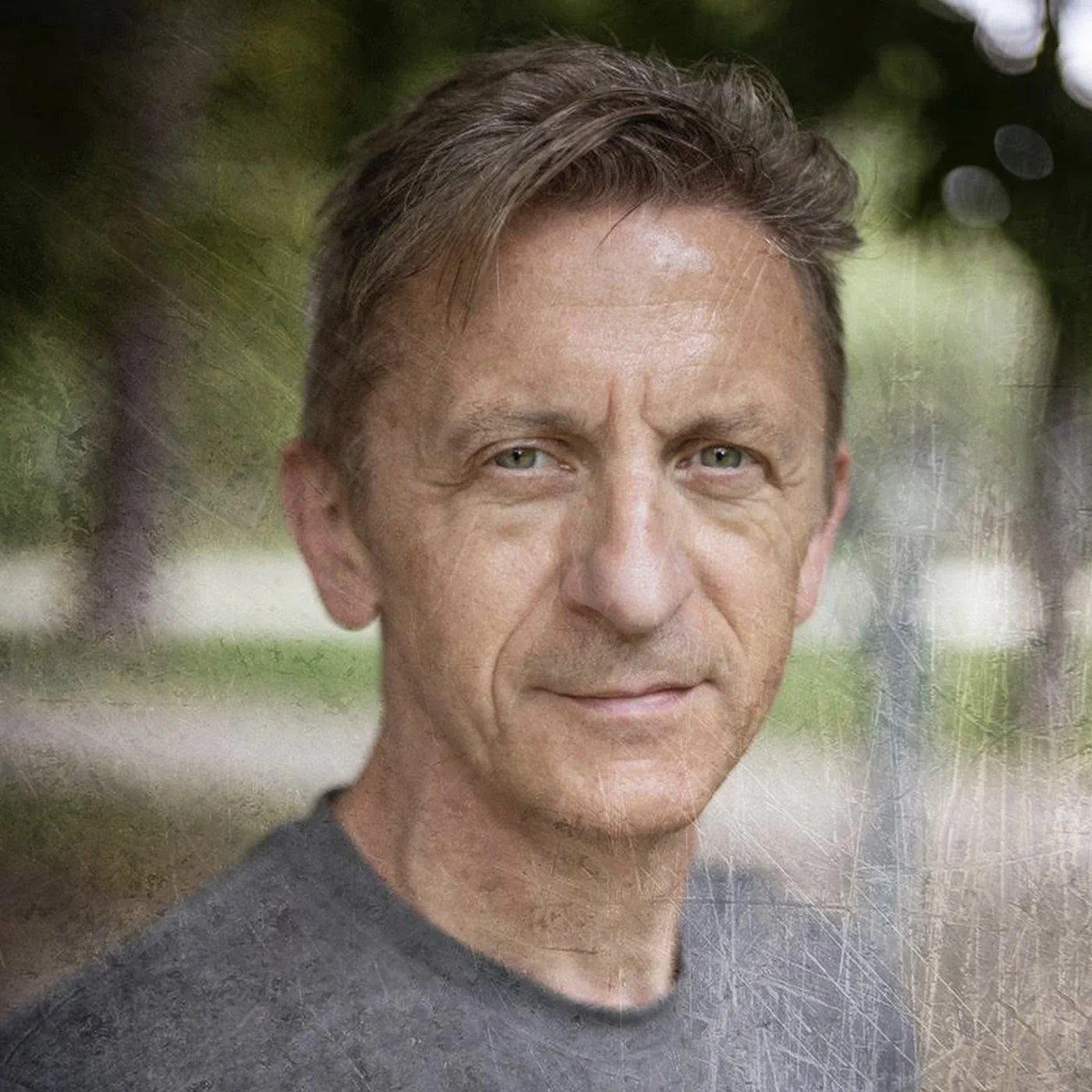
is a graduate of the Photography program at the Alberta University of the Arts in Calgary, Canada. He also holds a Master of Science degree from the University of Wroclaw, Poland and a Bachelor of Education degree from the University of Winnipeg, Canada. For more than 20 years, Mirek worked as a commercial photographer. His studio collaborated with advertising agencies and publishers in local, national, and international markets.Since 2011, after accepting a full-time teaching position, he chose to focus fully on education and fine art photography practice. His recent work explores experimental landscape and conceptual portrait photography. Mirek lives and works in Winnipeg, Canada.For projects or inquiries , please contact me directly. All the pictures are archival pigment prints on acid and lignin-free paper in limited edition: 16X24 edition of 1524X36 edition of 930X45 edition of 5Artist Statement:
“Dermis of the Planet” , “Terra’s Eczema”
    is an artistic portrayal of a lifeless, otherworldly fragment of the Earth’s crust. The way the landscapes are depicted and personalized moves them from reality and creates the illusion of a dreamy post-apocalyptic place that could be seen as a metaphor for inner (mental) landscapes. This subjective view of reality paradoxically increases its authenticity.  Although the landscapes are dried and deserted, the colorful filters covering them prevent the negative feelings from emerging and add beauty and excitement to the most desolate places. Blurred and filtered techniques along with the scratches on the surface make it very personal and imply the passing of time.
“Dermis of the Planet” is my very personal work in which exposure to abstract landscapes and solitary wandering in remote places of Canada, USA, Bolivia, Chile, Egypt, Turkey and Iceland gave me the feeling of being in contact with sort of geological temples in which I was forced to reflect on questions about our own sense of existence, time, and impermanence.
“Fallen Angels”
   is not a theological reconstruction nor an illustration of doctrine. It is a reflection on free will, conscious choice, and the cost of stepping outside an imposed order. The figures presented here are not demons, but beings defined by the moment they cease to function as part of a system and become subjects of decision.
In this context, “fall” does not signify punishment. It signifies the loss of innocence through choice. Each angel embodies a different form of transgression thought, doubt, empathy, desire, curiosity, error, resistance, or love. The fall is not an end, but the beginning of awareness — the point beyond which neutrality is no longer possible.         The bodies depicted are not carriers of guilt, but sites of decision.  One figure, Zerachiel, stands as a deliberate exception. Unlike the others, they do not fall. They remain within the order. Their presence introduces a counterpoint to the exhibition’s central thesis, suggesting that remaining — choosing not to rebel — may also carry a profound cost.        Fallen Angels invites viewers to reconsider the meaning of fall, freedom, and responsibility in a contemporary context, positioning free will not as an abstract idea, but as an embodied and often irreversible act.
“Liberated Angles”
investigates the figure of the angel as a construct defined entirely by function. Traditionally understood as messenger or guardian, the angel exists primarily as a symbol rather than as a body. In Liberated Angels, this symbolic order is suspended.The series Liberated Angels continues my earlier work on Fallen Angels but shifts the focus away from drama and transgression. In contrast to Fallen Angels — whose gestures are dramatic, conflicted, and charged with struggle — liberated angels do not fight. Their postures are quiet, often closed, and stripped of pathos. This is not the moment of transformation, but the condition after it: a state in which the decisive event has already taken place, and its consequences slowly settle into the body. Presenting nude angels as fashion like models provokes the viewer to investigate the concept. By removing recognizable attributes and iconography, the figures are stripped of narrative and hierarchy. The resulting images focus on physical presence, gravity, and stillness, emphasizing the body as a material condition rather than a carrier of meaning. These figures are liberated from their worries. The work proposes a space in which the body is allowed to remain without representing transcendence, morality, or belief. By imagining angels without function, I am ultimately reflecting on the human condition when they feel liberated from their internal or external oppressions. After years of working on the images, it is time to present them to the world. Hopefully the world will notice and appreciate my efforts.